
Every now and then I come across a window that tells a story before I even touch it. This one, tucked into the wall of a beautiful old stone farmhouse, had clearly had a long and difficult life. It hadn’t opened for decades. It had been cemented over, painted shut, patched, daubed, filled, and basically smothered into submission. By the time I arrived, the rot had taken hold and several other joiners had already declared it “beyond saving”.
But windows like this don’t get written off quite so easily. Not on my watch.
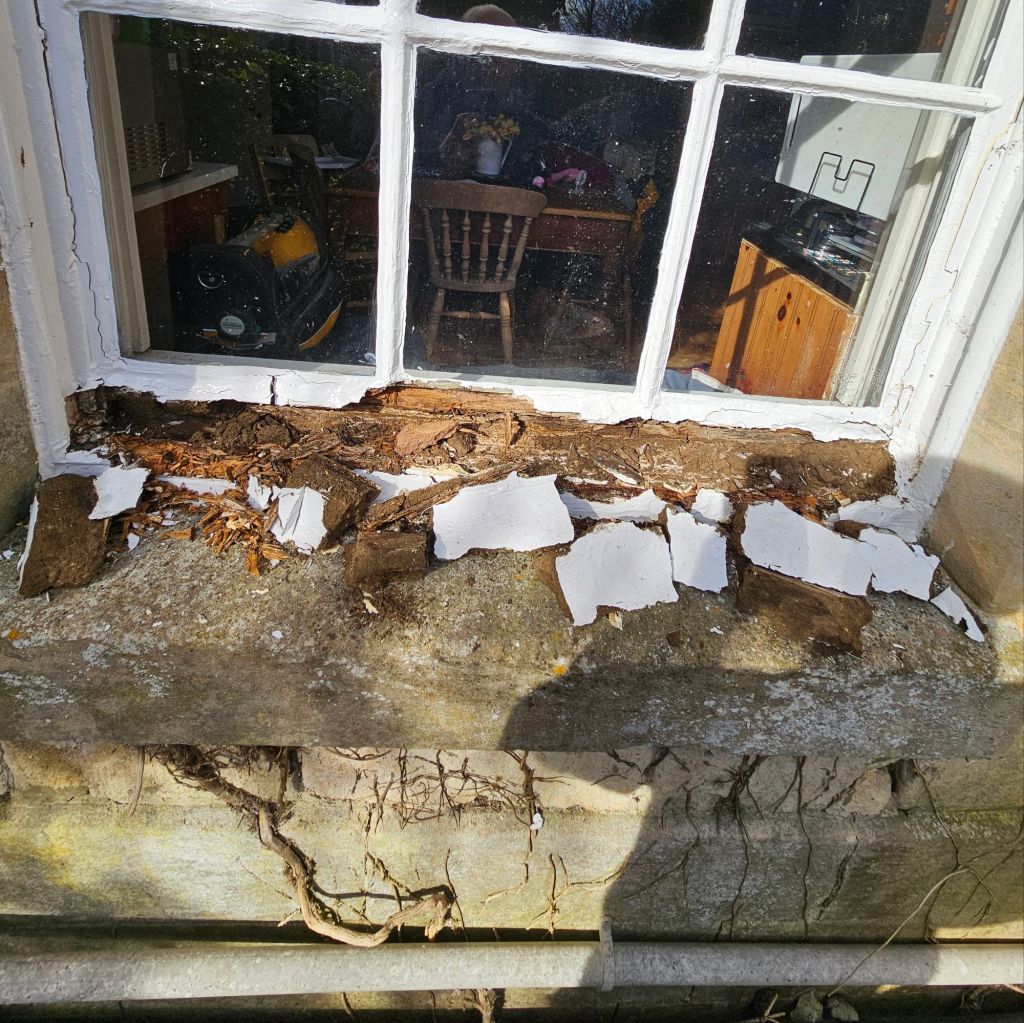
First Look: Cement, Decay, and a Whole Lot of Guesswork
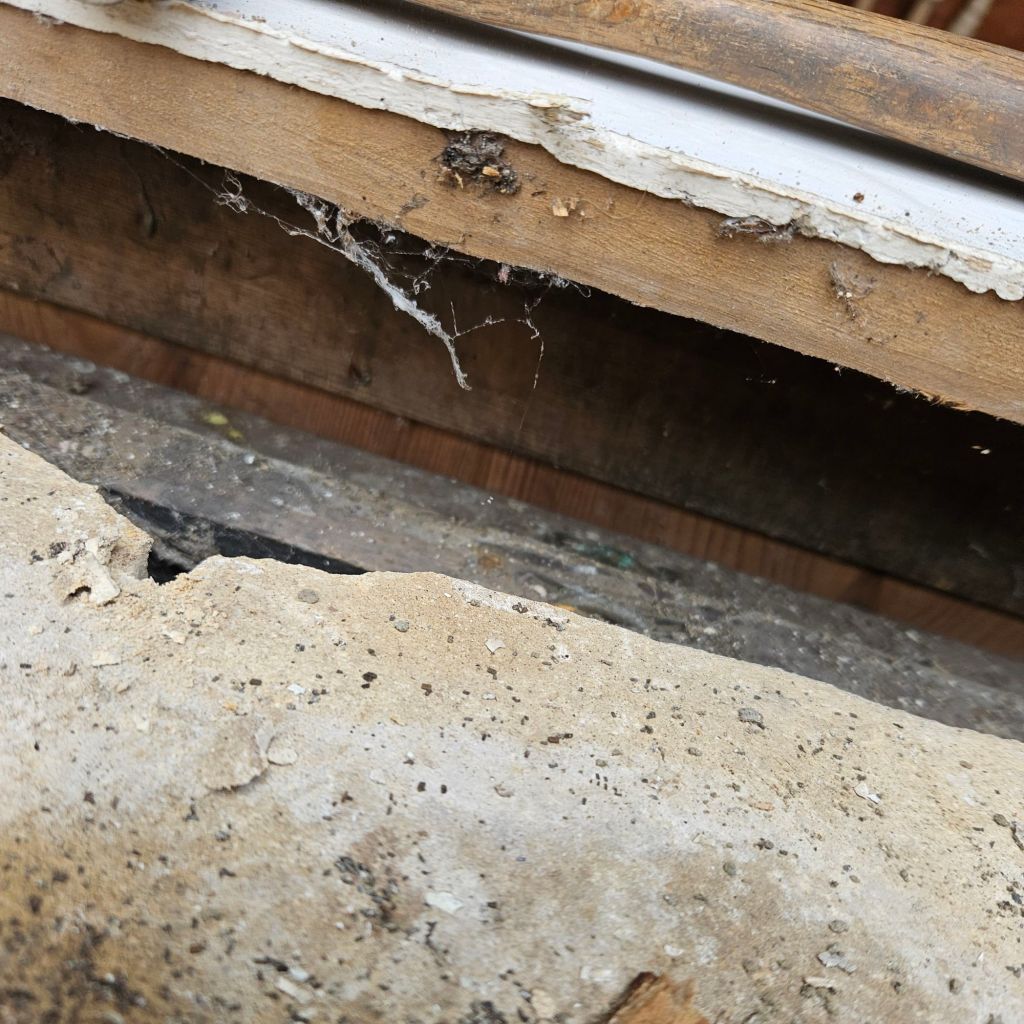
The lower section of the window was in an atrocious state. The sill had collapsed, the glazing bars were crumbling, and the original timber had been replaced in places with what can only be described as… mud and paint. The photos tell the story better than I can: huge chunks of failed filler falling away, wet rot right through the lower sash bottom rail, and a sash that wouldn’t have moved even if you begged it.
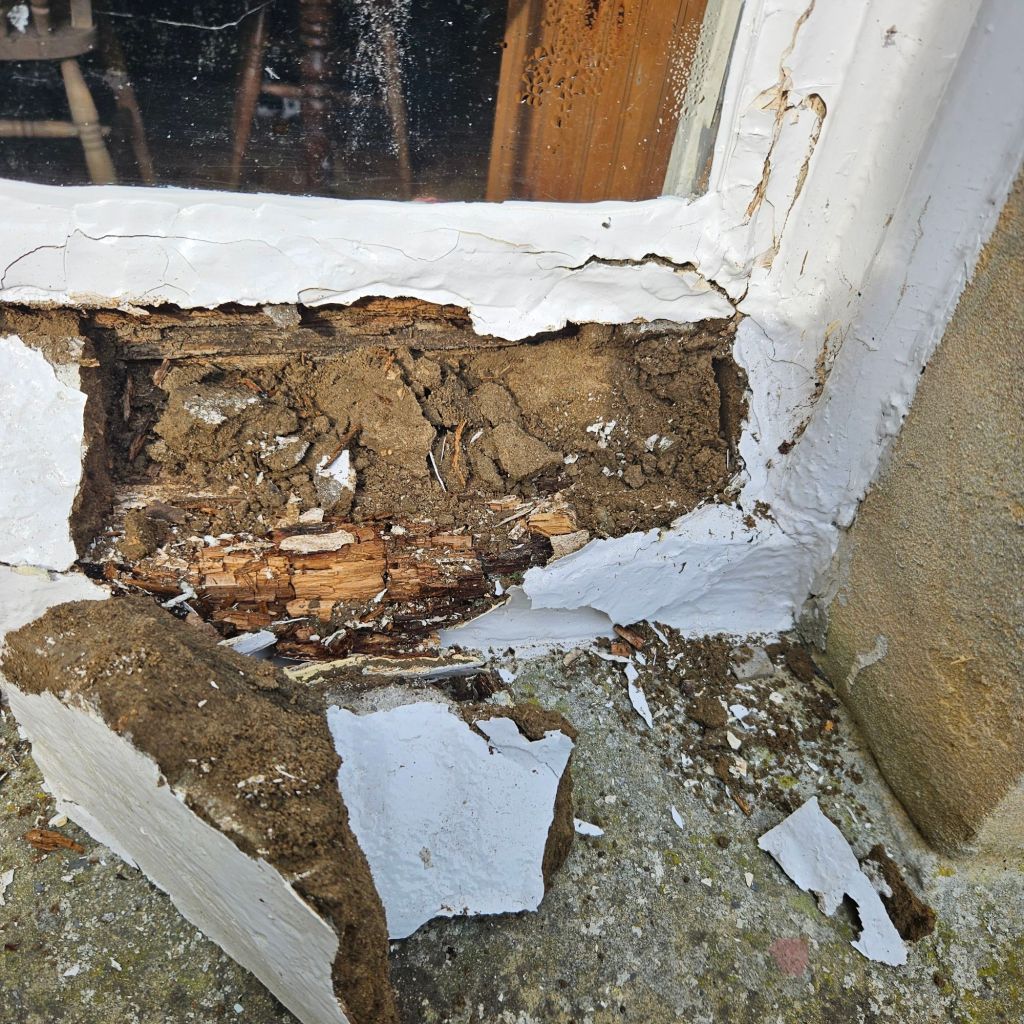
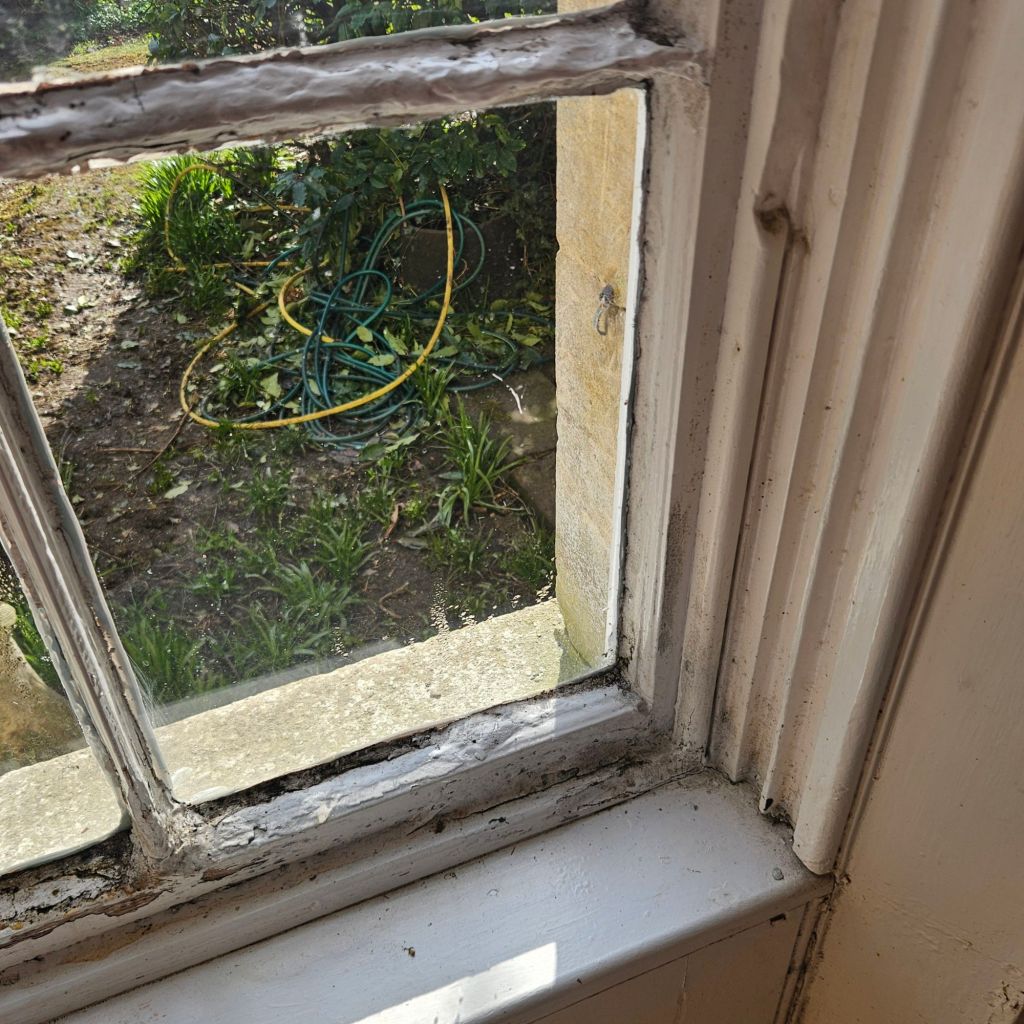
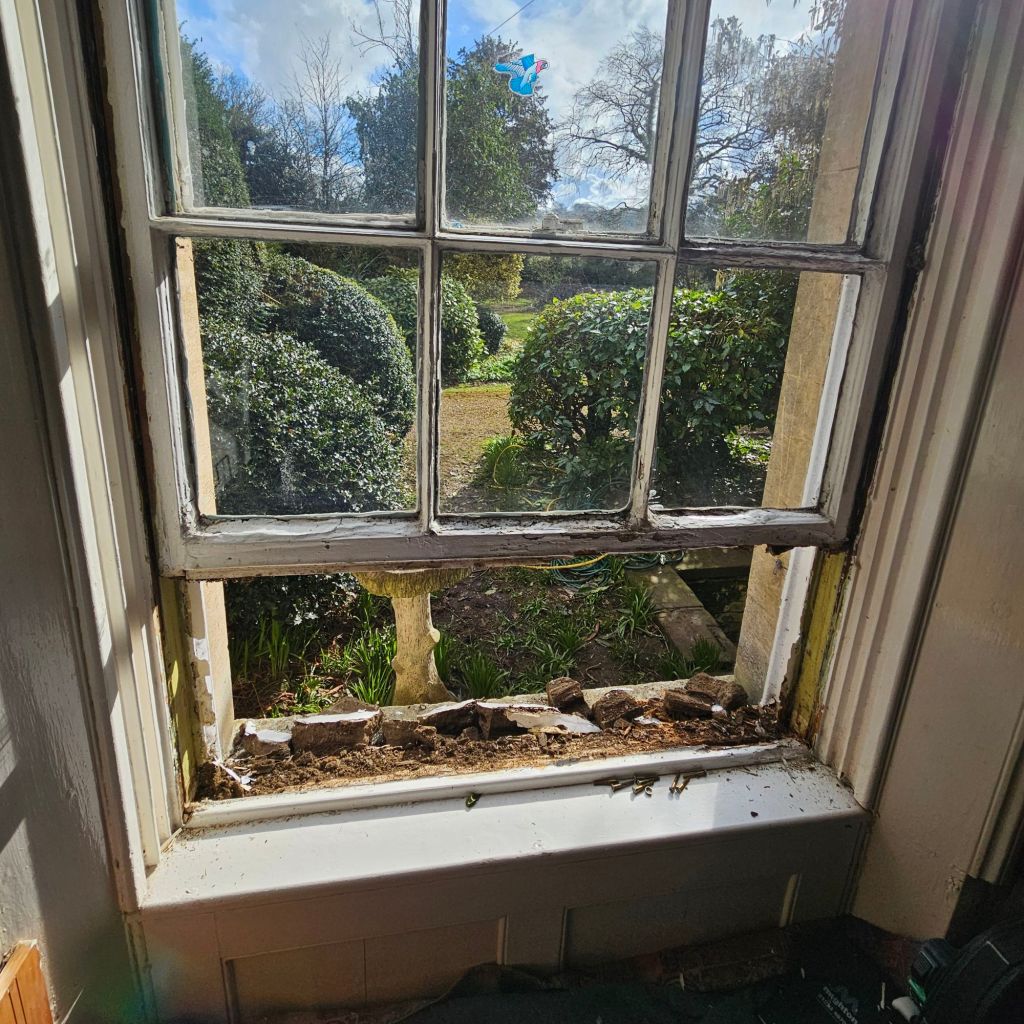
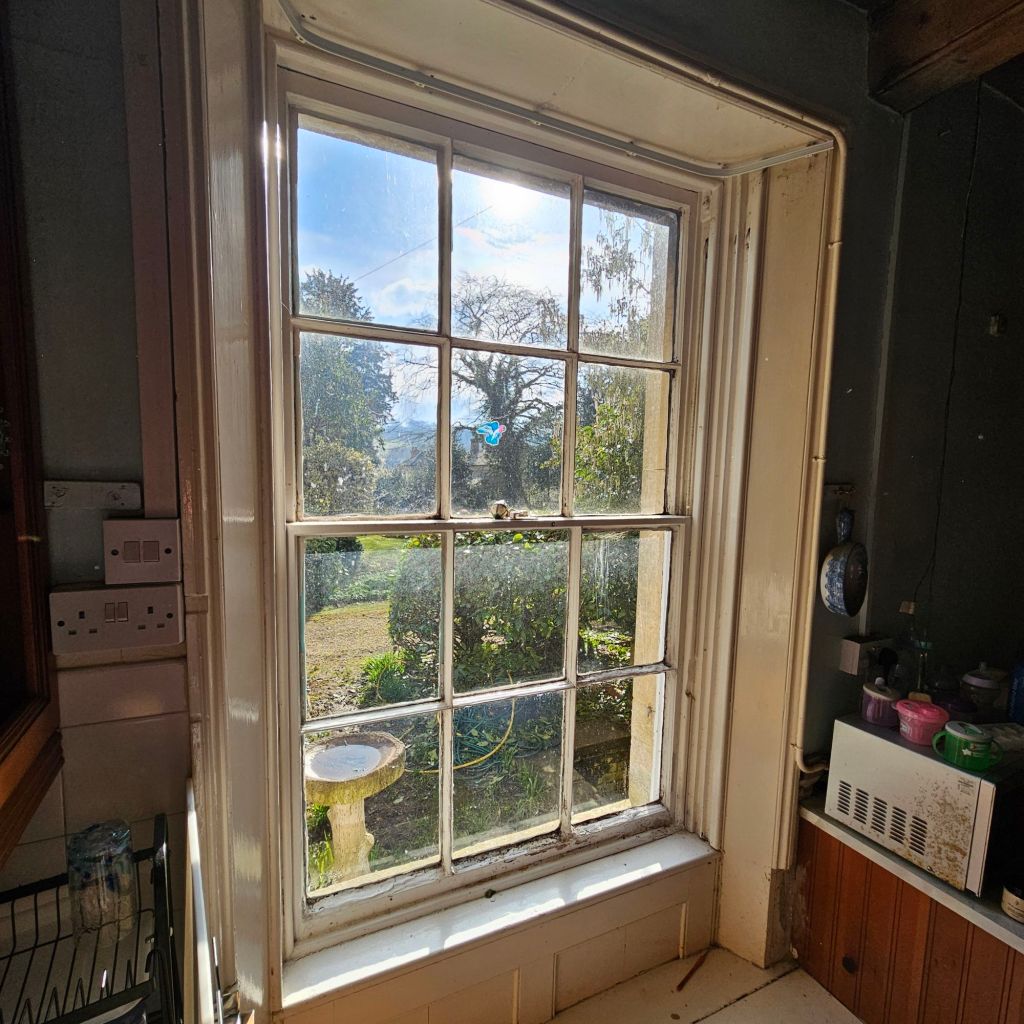
And despite all that, the underlying craftsmanship was outstanding. These early nineteenth-century windows were built with precision. Even after years of damp and neglect, the joints and mullions still showed the hand of a very skilled maker.
A Hidden Surprise: Vertical Sliding Shutters
During the strip-down I uncovered something the homeowners had no idea existed: a full set of vertical sliding shutters hidden inside the box frame. These were once a premium upgrade in Georgian and early Victorian homes. Most were removed or lost over the years, but this set had simply been trapped behind generations of paint and filler.
They couldn’t be reinstated because the internal finishes had changed, but finding them was a brilliant moment. A little time capsule of joinery history.
The Restoration: Rebuilding the Lower Sash from Scratch
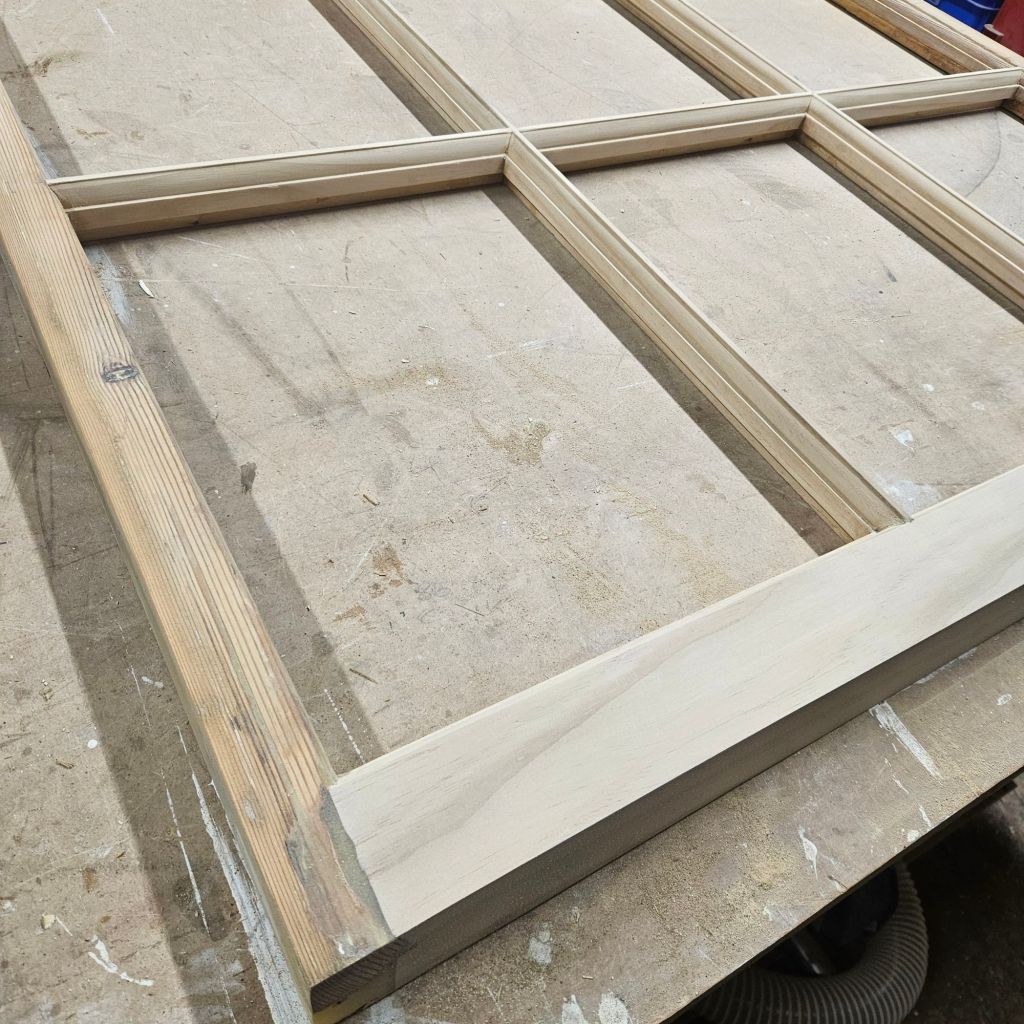
The bottom sash was too far gone to patch. So I rebuilt the entire lower half using proper materials:
New glazing bars and a new bottom rail in Accoya, machined to match the original profile.
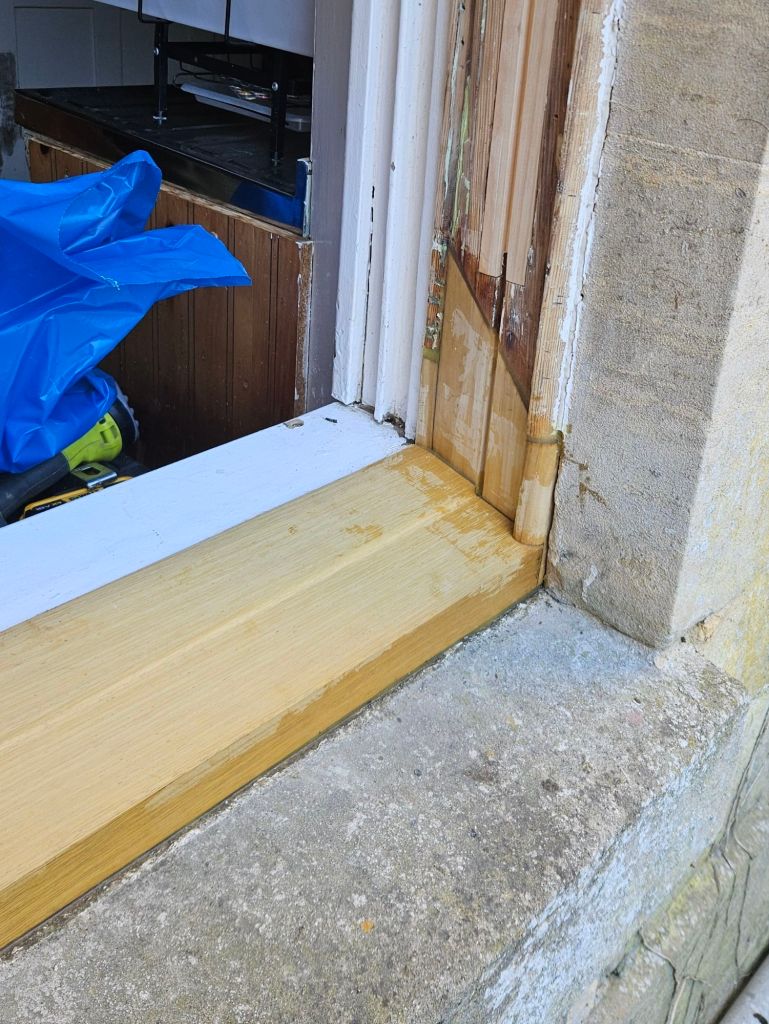
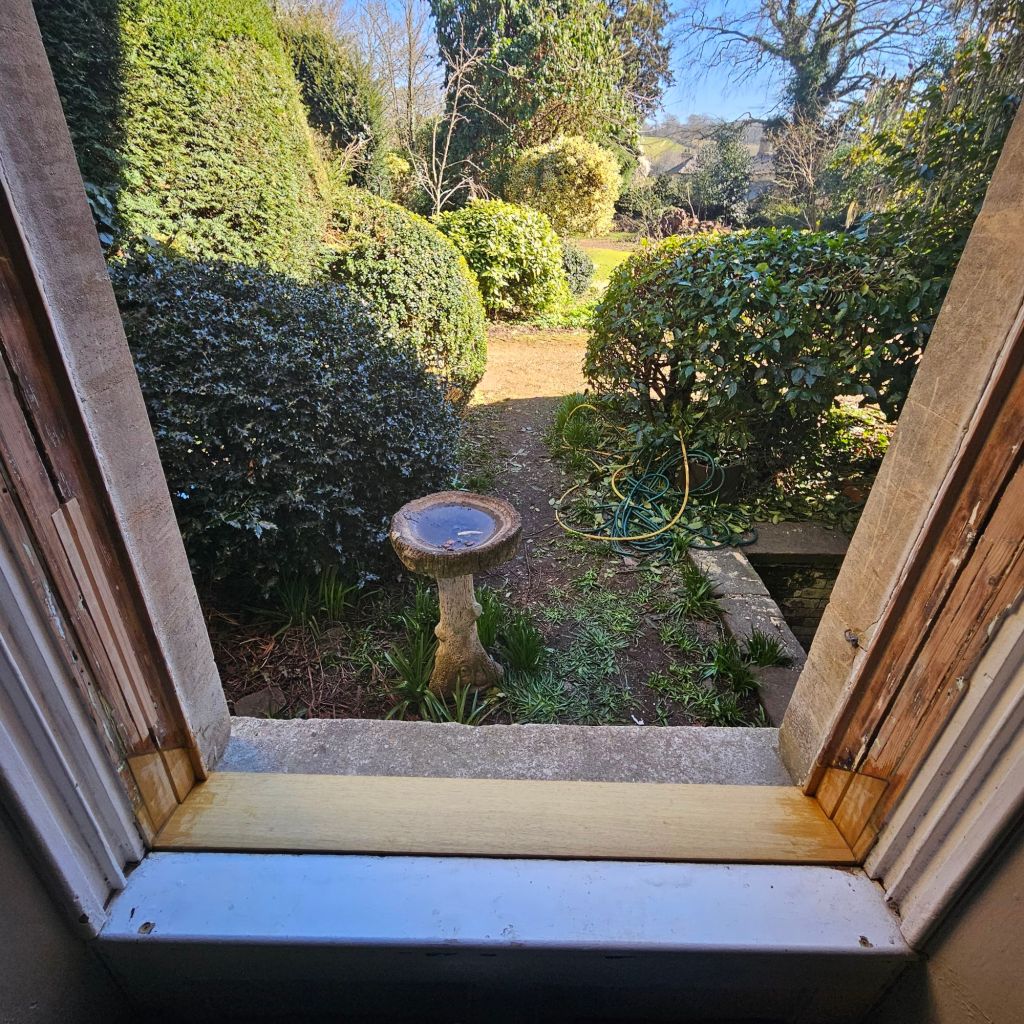
A new Iroko hardwood sill, with full cheek and stile splices using Repair Care resins for long-term durability.
Original glass cleaned and refitted wherever possible to preserve the character.
Every component was built to the exact dimensions and details of the original maker. The aim is always to conserve, not replace.

Rebalancing, Re-cording, and Getting It Working Again
Once the repairs were complete, both sashes were reinstalled into the box frame, fully re-corded, and balanced. I fitted discreet draught proofing throughout, so the window now opens smoothly, closes softly, and seals properly against cold air.
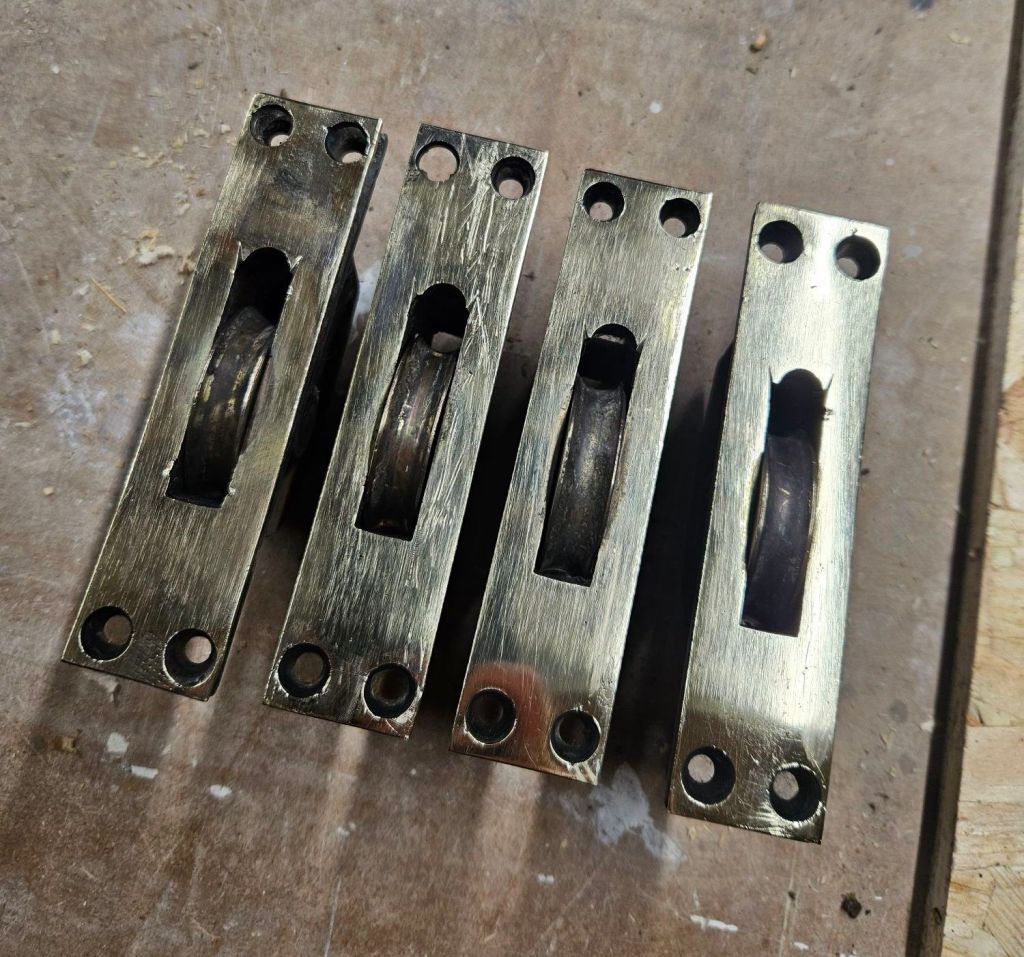
And those pulleys… hidden under thick gloss paint were beautiful* solid brass originals. Most windows from this era have cast iron pulleys that just get painted over. These were something special.
Finishing and Future-Proofing
Externally, it’s finished in Teknos Traffic White (RAL 9016). Internally, I left it fully primed and ready for the client’s decorator so the final finish matches the rest of the room.
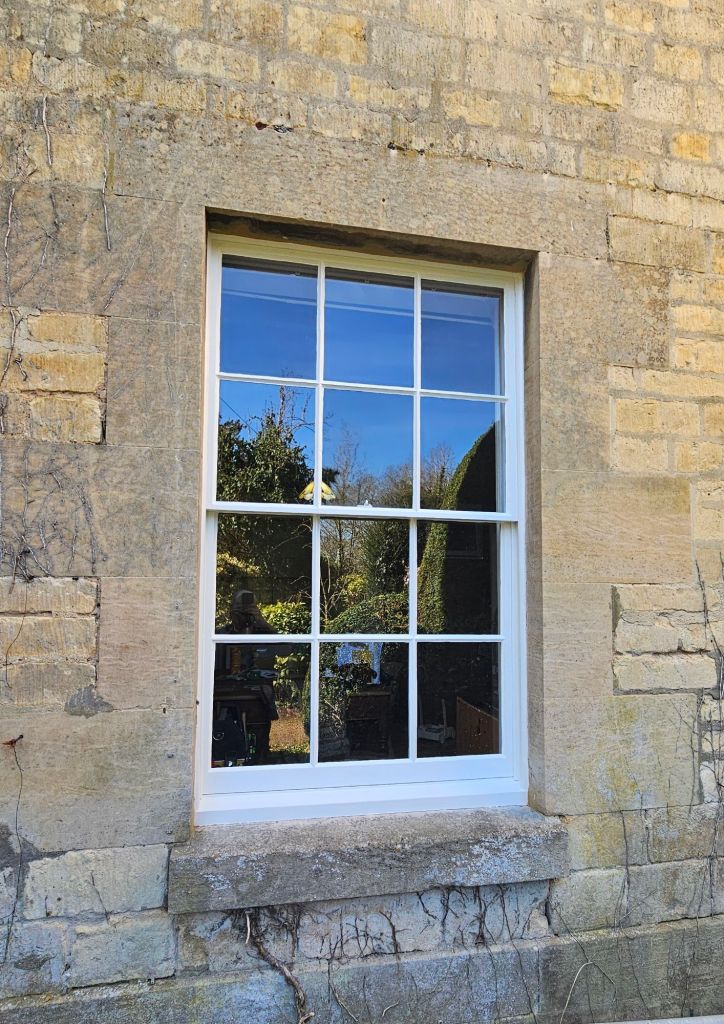
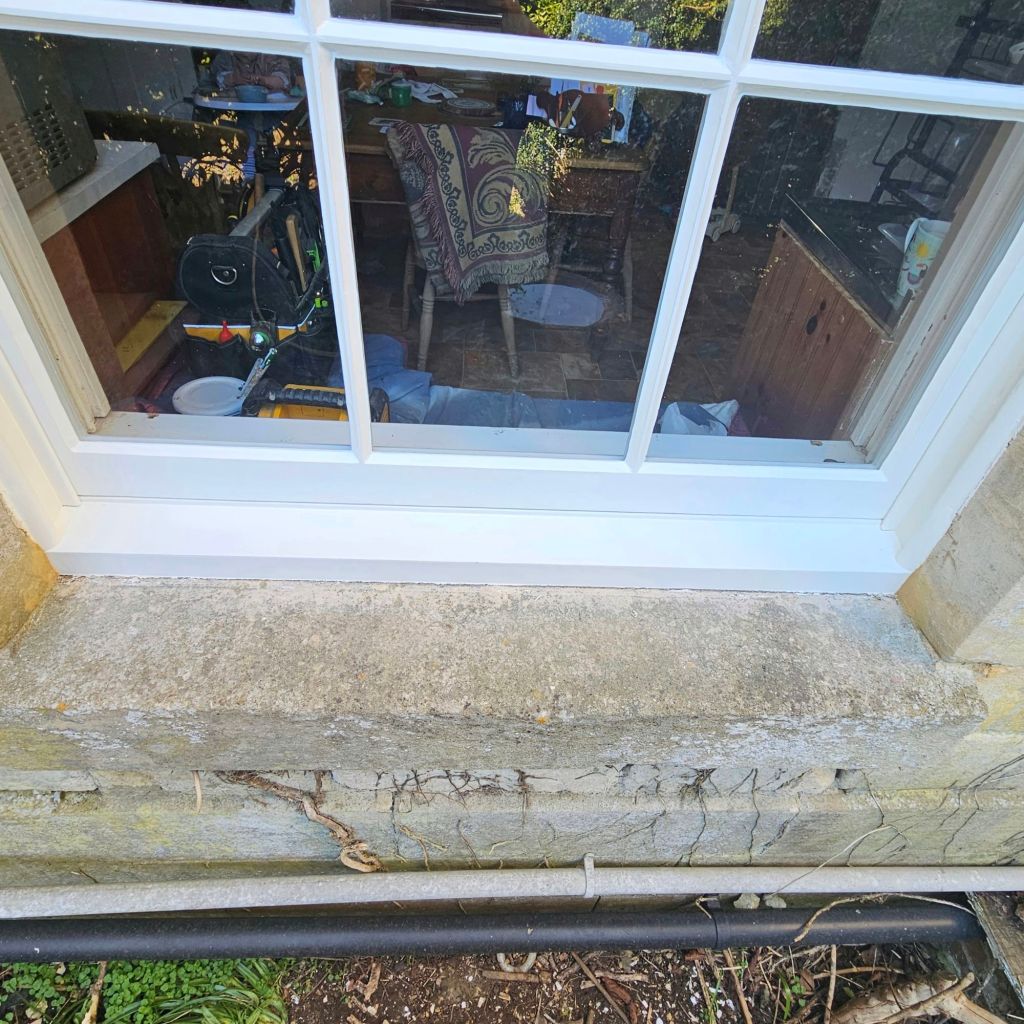

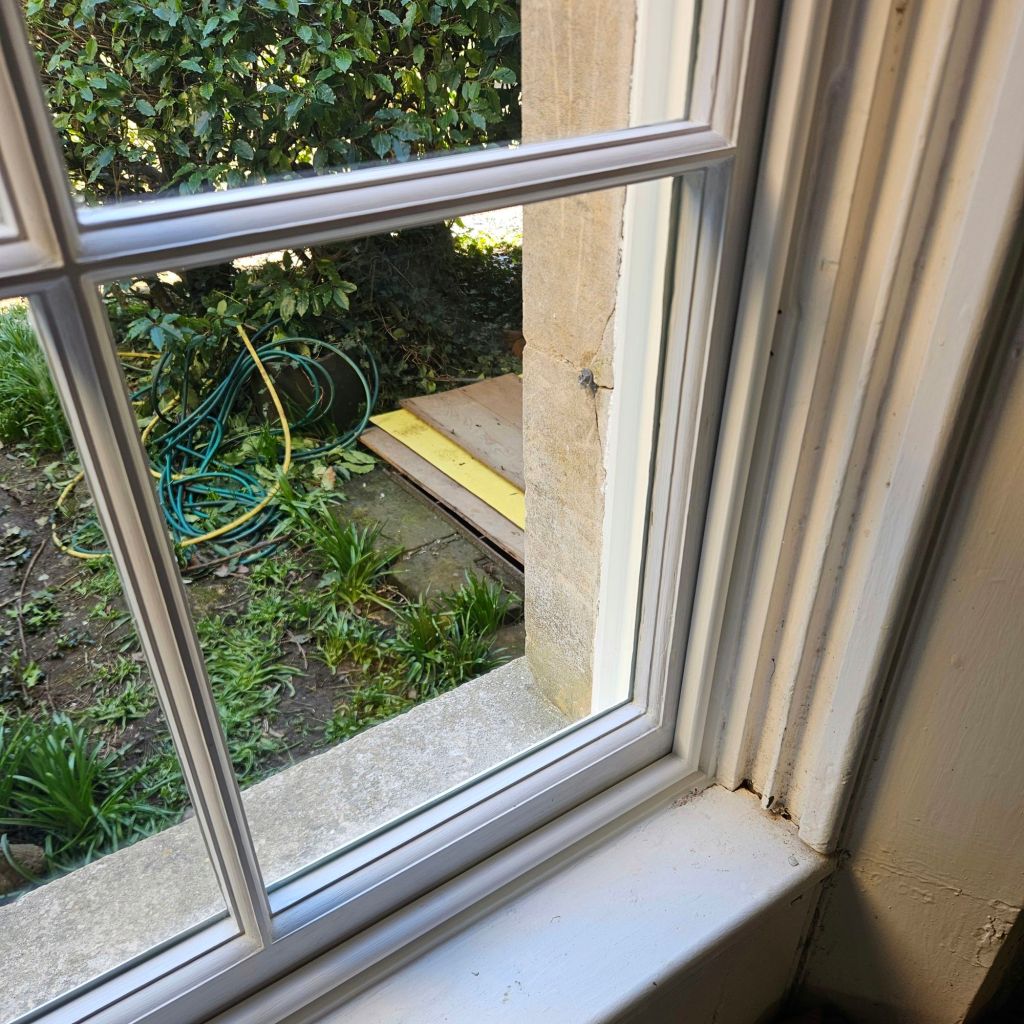
The transformation is exactly why I love doing this work. A window that had been written off is now fully functional again, energy efficient, and ready for another couple of centuries.
From “Replace It” to “It’s Better Than New”
If you’d seen this window at the start, you’d probably have agreed with the people who told the owners it needed ripping out. But these old sash windows are tough. They were built with skill, from proper timber, and they deserve a second chance.
Now it opens beautifully, keeps out the draughts, and looks completely at home in that stunning stone farmhouse. Heritage saved. Craftsmanship honoured. Job done.
 Sash Man